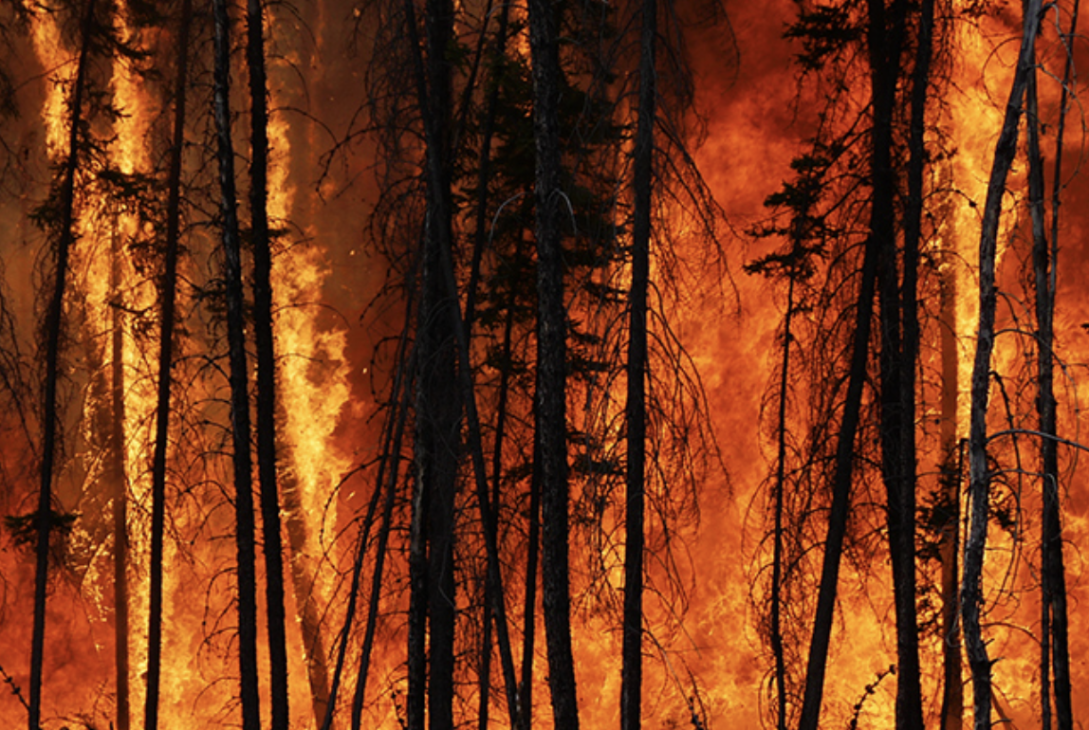
North-west Canada Forest Fire | Stefan Doerr/Imaggeo
Wildfires may seem like dystopian tragedies, products of a set of unprecedented circumstances, yet, in the present day, they are impossible to ignore. Every summer, images from the US, Australia and across the world emblazon our television screens, vividly displaying the destruction caused by wildfires, and not without reason. Four of the five worst years for wildfires have occurred since 2020, with 2024 setting the record of 13.5 million hectares (an area equivalent to the size of Greece) being decimated by fires. Record-high numbers of wildfires are also plaguing the UK, and it appears that the worst is yet to come. Like many environmental issues, climate change is a root cause and major accelerator of wildfires, and the recent spike in their numbers can be almost entirely attributed to the phenomenon. With global temperatures only set to increase in the coming years, immediate decisive action is needed to protect our forests and homes from the scourge of wildfires.
The immediate causes of wildfires are often human: unattended flames, glass bottles, careless cigarette disposal, and arson can all trigger a spark that eventually turns into a large wildfire. However, wildfires also require hot, dry and windy weather to develop, and these are the aspects that have been exacerbated by climate change. Increasing greenhouse gas levels in the atmosphere have meant that not only have summers been hotter and drier than usual, but these conditions have extended throughout the year, leading to warmer springs and autumns where wildfires can start despite not previously being possible. The increased chance of lightning strikes also means that the incidence of ‘natural’ fires has increased. Moreover, the combustion that occurs during fires releases an immensely large volume of carbon dioxide, and the loss of trees reduces the volume of carbon dioxide removed from the atmosphere, which only serves to enhance the greenhouse effect and worsen the impacts of the fires.
Wildfires have extensive and long-lasting impacts that can both devastate ecosystems and destroy communities. The soil’s infiltration capacity is significantly reduced following a wildfire, and thus the ground becomes unstable, which, in turn, leads to more erosion and stormwater runoff. This can pollute critical water sources with sediment and (due to the high levels of nitrogen and phosphorus in the soil following a fire) lead to eutrophication, an uncontrolled growth of algae which can deoxygenate the water and render the it void of any life. The heightened levels of nitrogen and carbon dioxide in the water can remain in water sources for over a decade, significantly compromising the long-term survival of nearby communities. The loss of vegetation can mean that many animals struggle to survive without their habitats and food sources, and pollutants in the water are thought to reduce animal immunity, leaving them more susceptible to diseases. The impacts of wildfires for humans also stretch beyond loss of homes and property: PM2.5, the extremely fine particulate matter released by wildfires, poses a significant health threat to humans. New studies estimate that, by the end of the century, 1.4 million people will die each year due to the impacts of wildfire smoke, more than road traffic accidents, which ranks in the top 10 leading causes of death worldwide.
Prevention of wildfires is a relatively simple task and one that can be achieved by the application of due caution during times of intense heat and dryness. Not having barbecues in grassy areas, not throwing lit cigarettes on the ground and carefully disposing glassware can all help to ensure that wildfires do not start in the first place. However, once ablaze, wildfires can be extremely difficult to stop, and firefighters must work tirelessly, not only combatting the blaze itself but also predicting where it will move towards next, in order to stop its spread. Using meteorological data, such as wind speed and direction, the path of the fire can be determined, and firebreaks, large ditches void of any inflammable material, can be constructed around the fire, after which firefighters can more easily extinguish the fire, whether that be from the ground or from the air. Backfiring, creating a small, controlled fire to remove flammable materials in a certain area, may also be used, as well as wetting or spreading fire retardant on areas where the wildfire is predicted to move. Despite the relative effectiveness of these methods, if we do not tackle the root cause of the increase in wildfire incidence, then the intensity and frequency of wildfire events will simply increase, putting the lives of more people and wildlife at risk and further devastating the environment.
The climate crisis has an innumerable number of impacts that will eventually be disastrous for humanity if not tackled promptly. Still, while many of these impacts can have opaque and distant connections to our lives, the immediate and catastrophic effects of wildfires are clear to see. Each year, more forests in an ever-expanding range will be under threat from fires, and the number of plants, animals and humans that suffer the consequences will also increase; with millions dying every year. As a result, it is critical to raise awareness about the underlying cause of wildfires and to propose
greater action, beyond just encouraging more considerate habits to prevent individual fires. We must accelerate the shift to more sustainable transport, industry and agriculture to reduce greenhouse gas emissions and restore the climate to its natural balance; only this way will we be able to truly combat wildfires and protect our forests and homes from these threats.