
Electric Vehicles | Earth.org
Introduction
In 2024, more than 20% of all car sales were electric, a 25% increase from 2023 (IEA, 2024). However, there has been a rise in scepticism recently, especially with the prevalence of climate change denial in today’s politics. This has cast doubt over the true cleanliness of these electric vehicles (EVs). This article will investigate the true emissions of EVs by probing the sourcing, manufacturing, charging, and recycling of EVs and their components to see if
they are capable of leading our Net Zero goals.
The Initial Environmental Problems of EVs
There have been arguments that EVs’ reductions in emissions are cancelled out by their sourcing, manufacturing, disposal, and charging methods, which can be fossil fuel intensive and damaging to the environment. For instance, an article in Forbes states that the making of an EV creates 114% more mass of CO₂ than a normal car (Doshi, 2021). Additionally, an article from the Mackinac Centre for Public Policy highlights another similar statistic where the author states that driving a Tesla Model S is equivalent to driving a petrol-fuelled BMW 320d for 60,000 miles in terms of CO₂ emissions. It goes on to say that the disposal of EV lithium-ion batteries, which are unsafe and expensive to recycle, causes contamination of water and pollutes the environment due to the toxic chemicals present in them (Rowland, 2023). Moreover, a report from the World Economic Forum states that manufacturing an EV produces twice as much carbon emissions as a combustion engine car (Eckert, 2019).
This is exacerbated by the fact that the sourcing of components for the EV, such as cobalt for the EV’s battery, are produced in countries where environmental and labour standards are low. For instance, the Democratic Republic of Congo (DRC), where 70% of cobalt comes from, mines using child labour and carbon-intensive extraction techniques. Not only pollute is this
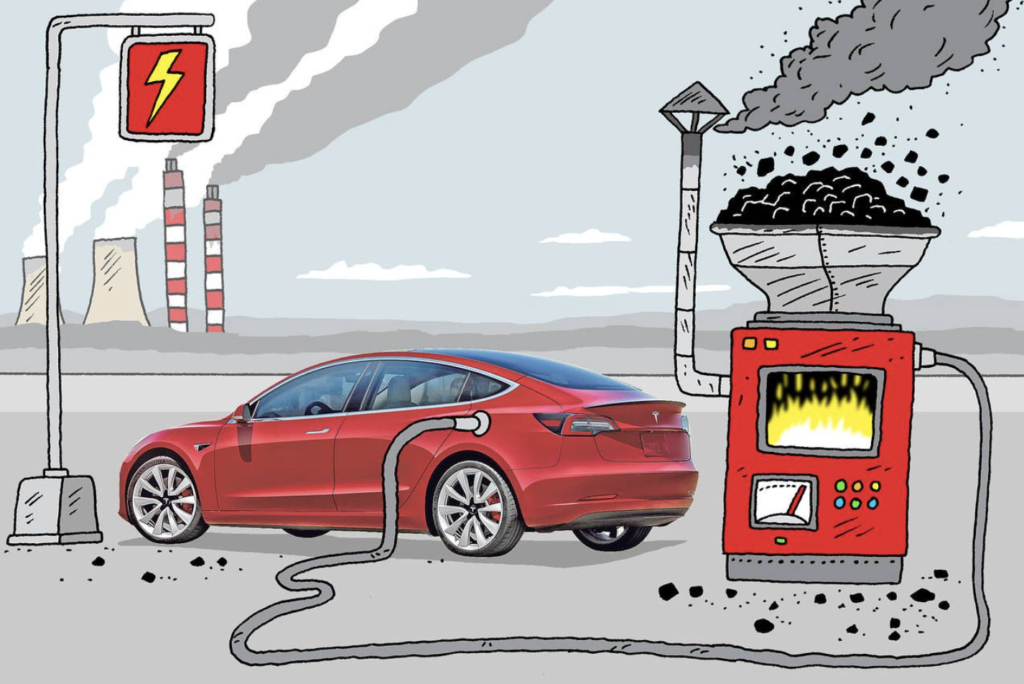
damaging to the environment but they also produce toxic chemicals in the atmosphere and poisons water sources. Finally, the electric charging of the EV’s battery is only as green as the sourcing of the electricity. If the electricity is produced from coal, then it renders the ‘greenness’ of the charging useless.
Recycling and Reusing
This all points to EVs as a counterproductive measure to alleviating climate change. However, EVs are still one of the cleanest methods of transportation and are key to fighting the climate crisis. Yet, since the recycling of lithium-ion batteries is not viable due to its high cost and high-energy, and often fossil fuel-intensive, consuming process, many batteries can end up in landfill. An article from the National Grid, however, states that the power of lithiumion batteries in EVs are much better managed than in other technology that requires them.
This means that it has a much longer life of around eight years or 100,000 miles, which results in fewer but more efficient batteries being used (The National Grid, n.d.). Furthermore, especially with the improvement in recycling technology, batteries after a prolonged period of time, are no longer effective enough to power EVs and can be reused and recycled more easily and cheaply. This is shown in the graph below from Bloomberg and the German
Renewable Energy Federation, which predicts over a doubling in gigawatt hours of battery capacity from secondary life batteries (reused batteries), as well as a doubling in EV sales.
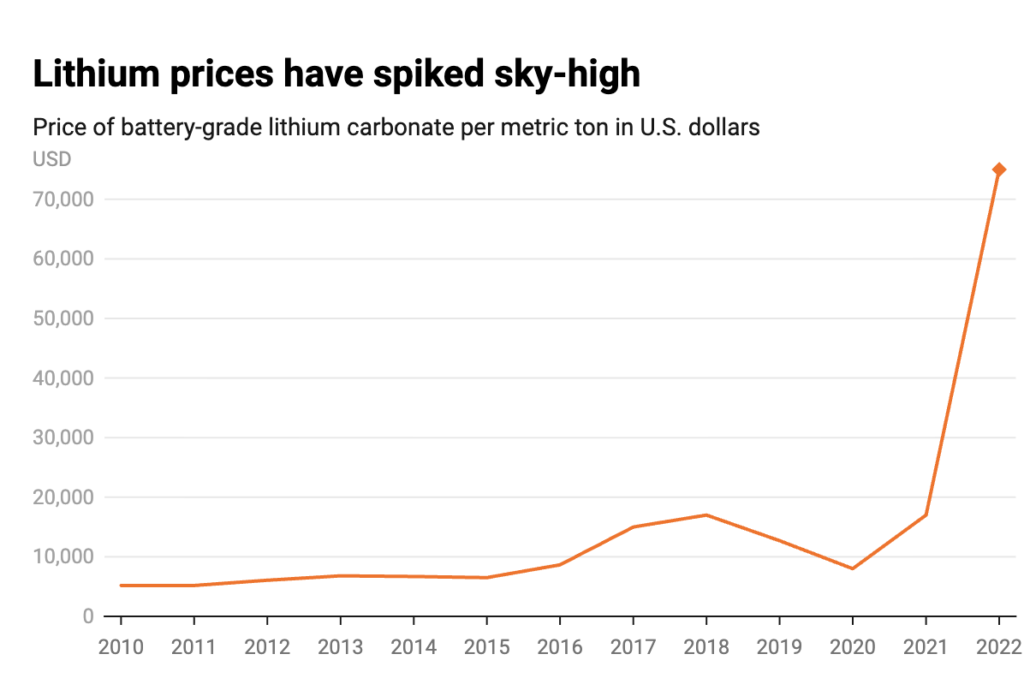
Moreover, with the increased value of lithium and cobalt as a result of this EV
revolution, people now have more of a financial incentive to save, recycle, and repurpose the components of EV batteries as a result of higher market prices of lithium and cobalt. This is shown in the two graphs from the US Geological Survey and Capital Economics respectively, showing the general rise in lithium and cobalt prices due to the increased and rapid demand for EVs.
Lithium Prices:
Cobalt Prices
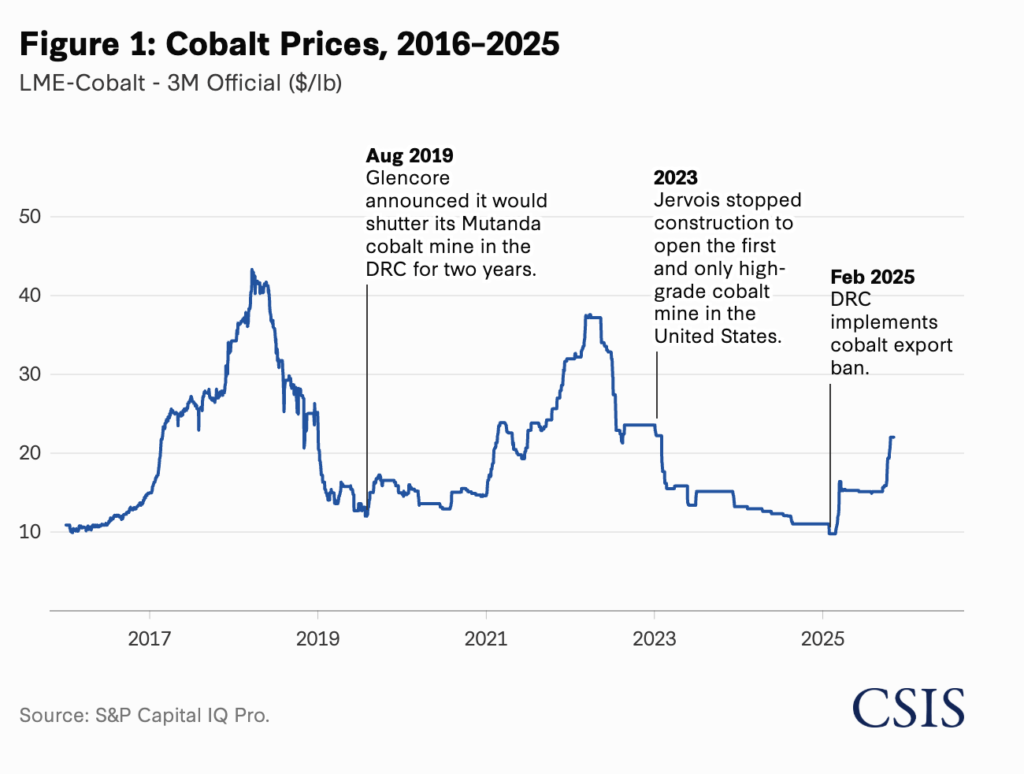
This shows that there is huge promise in the conservation, recycling, and reusing of EV batteries.
Charging
Other problems include how EVs are charged electrically using fossil fuels. In spite of this, especially with the sharp rise in the use of renewable energy across the world, with the BBC citing that 40% of the world’s energy comes from renewable sources (Fisher, 2025), charging for EVs will soon phase out fossil fuels. Thus, the environmental problem of EV charging will be short-lived, as shown in the graph below which predicts for solar and wind
energy will make up the bulk of global electricity generation by 2030.
Therefore, statistically, in a couple of years, this will make charging EVs achieve one of the most important environmental benefits it was supposed to offer: providing a clean alternative to petrol and diesel.
Sourcing
There are well-documented ethical concerns over the sourcing of EVs as well,
especially cobalt. 70% of the world’s cobalt comes from the DRC (World Bank, 2021), thus major EV companies such as Tesla, which use lithium-ion batteries on a large scale, buy cobalt from the DRC to make their batteries. However, it is well known that human rights abuses, such as child labour, poor environmental standards, and rampant corruption, taint the manufacturing of EVs. Therefore, either international standards can be met, or a shift from
cobalt is needed to reduce the environmental footprint and abuse of the DRC’s mining methods. A BBC article lays out two of the best alternatives at hand to make the powering of EVs more carbon neutral.
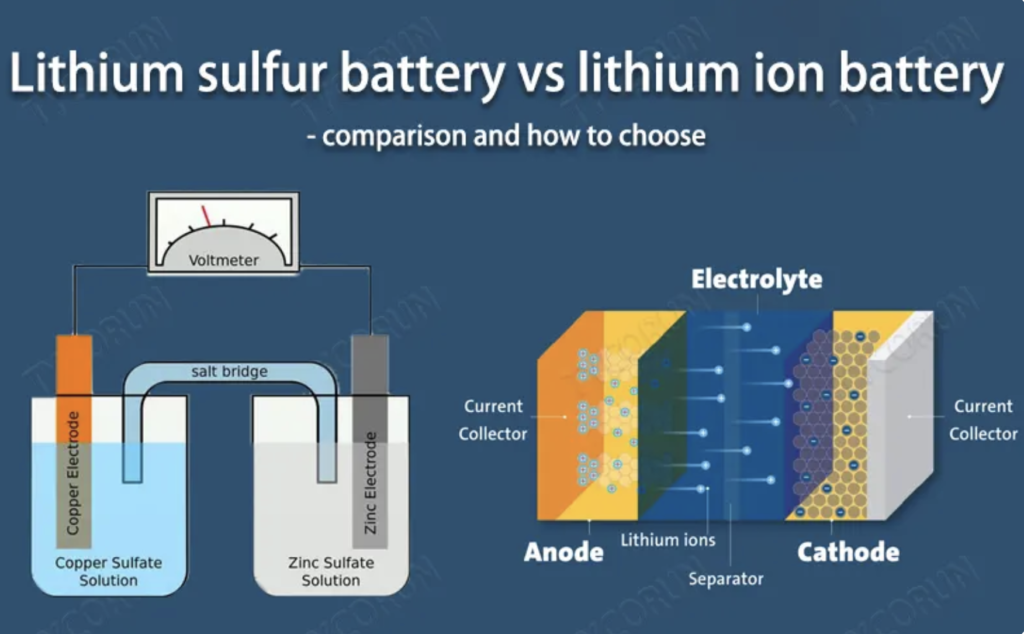
One alternative is the solid-state battery. The key difference in this battery is the use of a solid electrolyte rather than a liquid electrolyte. This results in a safer battery, higher energy density, and faster charging. However, due to its high cost, difficulty in integration with current supply chains, and lack of development for the optimal electrolyte, it is currently not a feasible option. The article also suggests the use of a lithium-sulphur battery. Main
benefits of this alternative include low cost, easiness to integrate into current supply chains, and higher energy density. Downsides include its unreliability and potential danger as they are not developed enough for extensive use (Lee, 2024).
While lithium-ion batteries are the best now, in the future, the solid-state battery and lithium-sulphur battery could overtake it as technology advances and further refines the flaws in both. Considering both have a higher
energy density, and the lithium-sulphur battery being much more environmentally friendly, in a couple of decades, I predict that lithium-sulphur batteries and solid-state batteries will be the future of powering EVs. The Society of Automotive Engineers (SAE) predicts that solidstate batteries could become widespread by as early as 2030 (SAE International, 2023). This
means the initial carbon debt of the production of an EV is reduced, making its overall emissions more carbon neutral.
Manufacturing
Finally, due to EVs producing no tailpipe emissions and, if disposed responsibly, also releasing no toxic chemicals into the environment, petrol- and diesel-fuelled cars are far less environmentally friendly. The significantly decreased carbon footprint, if implemented on a larger scale, can significantly slow the accelerated greenhouse effect. This is backed up by a
study from The International Council on Clean Transportation (ICCT), which states that the reduction in emissions in an EV compared to a combustion engine range from 20–70% depending on where the car is used, with that number to increase substantially by 2030 (Bieker, 2021). This is key considering cars account for 61% of total CO₂ emissions (European
Parliament, 2024), meaning currently, if we take the 70% reduction figure, we can approximately reduce global total emissions by 18%.
Another statistic from the European Federation for Transport and Environment states that even in the worst-case scenario, considering sourcing, manufacturing, charging, and disposing, EVs still emit 37% less
emissions than petrol cars, with a huge 83% reduction if the car is from and driven in Sweden. Furthermore, the article projects that CO₂ emissions will be reduced four-fold by 2030 (Gimbert, 2022) due to improvements in technology and supply chains. For example, China, where 60% of EVs are made, has pledged to phase out coal by 2030, which will further reduce emissions during the fossil fuel-intensive manufacturing and charging of EVs. This is significant
considering the sheer number of electric cars made and used in China.
Moreover, EV companies like Tesla have already taken steps and made pledges to source and manufacture their EVs more sustainably, with results including 20 million metric tons of CO₂ avoided, and promises to make Tesla factories carbon neutral (Tesla, 2023).
Conclusion
In conclusion, despite the fact that EVs produce more emissions up front in their manufacturing than petrol cars, once they are put into use, EVs soon cancel out the deficit and, in the long term, significantly reduce emissions in spite of where the EV is sourced and made. Furthermore, the initial carbon debt in the making of an EV is significantly reduced due to the huge promise provided by new and greener charging, recycling, manufacturing, and
sourcing methods.
These promising figures and predictions demonstrate how EVs are one of
the main drivers towards powering the fight against climate change and our Net Zero goals, while giving us affordable, safe, and efficient drives. Thus, this shows how vital it is to further invest in and improve the EV industry considering its vital importance in achieving our climate goals.
Works Cited
Bieker, Georg. 2021. A global comparison of the life cycle greenhouse gas emissions of combustion engine and electric passenger cars. Accessed September 24, 2025. https://theicct.org/publication/a-global-comparison-of-the-life-cycle-greenhouse-gasemissions-of-combustion-engine-and-electric-passenger-cars/.
Doshi, Tilak. 2021. The Dirty Secrets of ‘Clean’ Electric Vehicles. Accessed September 24, https://www.forbes.com/sites/tilakdoshi/2020/08/02/the-dirty-secrets-of-clean-electricvehicles/.
Eckert, Jonathan. 2019. Batteries can be part of the fight against climate change – if we do these five things. Accessed September 24, 2025.
https://www.weforum.org/stories/2017/11/battery-batteries-electric-cars-carbon-sustainablepower-energy/.
European Parliament. 2024. CO₂ emissions from cars: facts and figures (infographics). Accessed September 24, 2025. https://www.europarl.europa.eu/topics/en/article/20190313STO31218/co2-emissions-fromcars-facts-and-figures-infographics.
Fisher, Jonah. 2025. Clean energy’s share of world’s electricity reaches 40%, report says. 8 April. Accessed September 24, 2025. https://www.bbc.co.uk/news/articles/cq80ygdd3zlo.
Gimbert, Yoann. 2022. How clean are Electric Cars? Accessed September 24, 2025. https://www.transportenvironment.org/articles/how-clean-are-electric-cars.
IEA. 2024. Trends in electric car markets. Accessed September 24, 2025.
https://www.iea.org/reports/global-ev-outlook-2025/trends-in-electric-car-markets-2.
Lee, Claudia. 2024. We rely heavily on lithium batteries – but there’s a growing array of alternatives. Accessed September 24, 2025. https://www.bbc.com/future/article/20240319-
the-most-sustainable-alternatives-to-lithium-batteries.
Rowland, Lloyd. 2023. Electric vehicles scar the environment. Accessed September 24, https://www.mackinac.org/blog/2023/electric-vehicles-scar-the-environment.
SAE International. 2023. Can Solid-State batteries commercialize by 2030? Accessed September 24, 2025. https://www.sae.org/news/2023/11/solid-state-battery-status.
Tesla. 2023. Impact Report 2023. Accessed September 24, 2025.
https://www.tesla.com/en_gb/impact.
The National Grid. n.d. Busting the myths and misconceptions about electric vehicles. Accessed September 24, 2025. https://www.nationalgrid.com/stories/journey-to-netzero/electric-vehicles-myths-misconceptions.
World Bank. 2021. Cobalt in the Democratic Republic of Congo. Accessed September 24, 2025. https://documents1.worldbank.org/curated/en/09950000131236438/pdf/P1723770a0f570093
092050c1bdd6a29df.pdf.