Solastalgia | Scientific American
‘At first I wanted to erase the Roman name and convert all Roman territory into a Gothic empire. I longed for Romania to become Gothia, and Athaulf to be what Caesar Augustus had been. But […] I have more prudently chosen the different glory of reviving the Roman name with Gothic vigour, and I hope to be acknowledged by posterity as the initiator of a Roman restoration, since it is impossible for me to alter the character of this empire.’
Athaulf, King of the Visigoths 410-5 AD
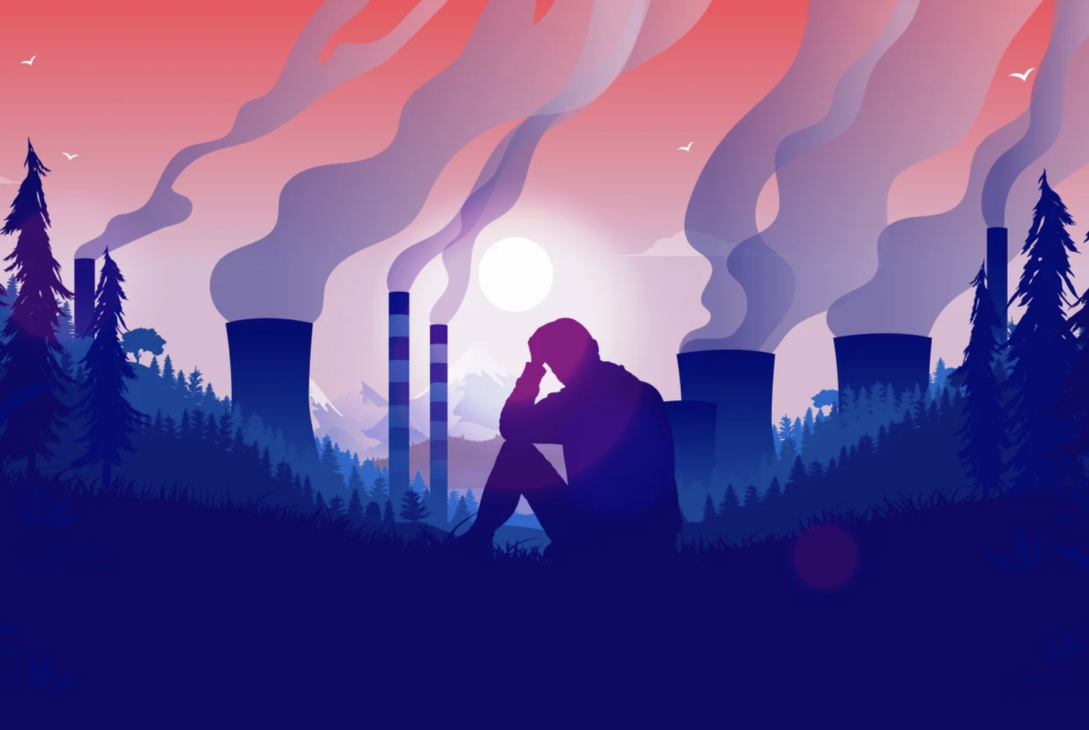
Above all, climate change is a social problem. It is unearthing profound emotions within us in both rural and urban settings – solastalgia, ‘a form of psychic or existential distress caused by environmental change‘, or stuplimity, astonishment ‘paradoxically united with boredom’. But for nomadic societies across the world, climate change is even more socially devastating. Since the Agricultural Revolution, much of the change from nomadic to sedentary life has been a case of nomads being forced to assimilate. Whether this has been good or evil is immaterial here. Climate change presents a new imperialist force which endangers a greater homogenisation of the world than ever before. Such an outcome as climate change seems to engender would be catastrophic.
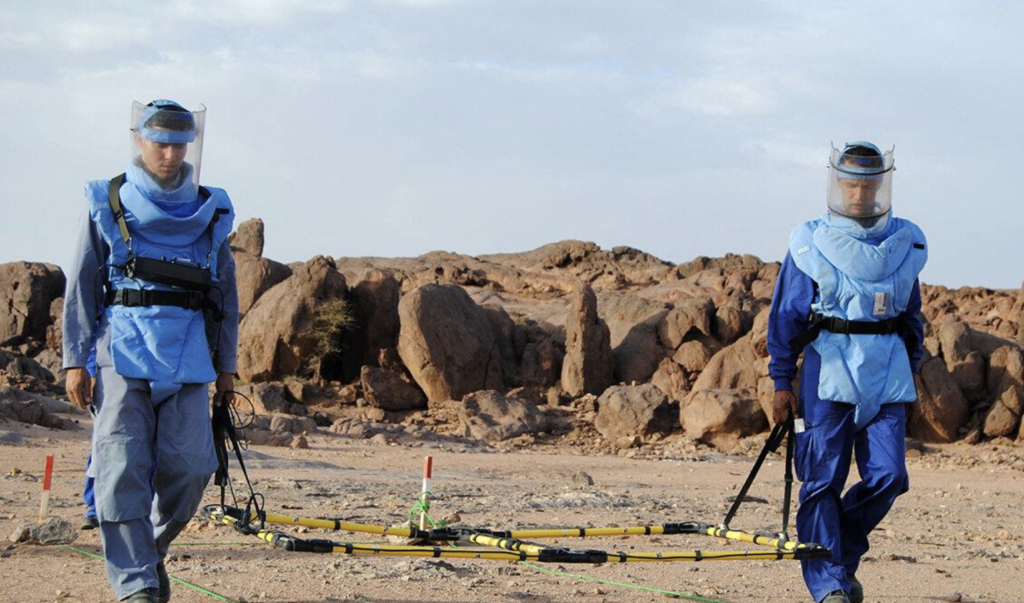
Nomadism evolved as a way to adapt to the weather, a pragmatic way of life less intense and less intensive than that of the sedentary farmer. But in West Africa, the weather is now disintegrating the Sahrawi nomads’ identity. For the past half-century, they have been embroiled in the continuing Western Sahara conflict. Unexploded ordnance and landmines left by Moroccan forces, of which perhaps 7mn populate the sands of the western Sahara, prevent the nomads from grazing the most fertile land.
They also leach toxins into the soil and water, poisoning them and eroding what soil there is if they explode. Climate change has exacerbated the problem, shifting the mines more frequently in the sand and more frequently triggering them in the process. But the nomads have adapted to this, marking the landmines with stones. ‘Now the landmines are part of the ecological backdrop of the Sahara, just another obstacle the nomads face, like the heat and the drought and the blowing sand’.
The conflict has brought other obstacles besides. Many Sahrawi people are still refugees, having fled during the Western Sahara War (1975-91). Some have adopted sedentary ways, like Sahrawi ‘deminers’, employed to bare-handedly unearth mines. The rest still in their historic lands are ‘second-class citizens’, their population diluted by politically driven Moroccan emigration. Literally ‘inhabitants of the desert’, the import of the land to the Sahrawi identity cannot be understated. When their landscape consists of Moroccan army outposts, electronic sensors which monitor their presence, and a network of sand and earth berms amongst the landmines which physically pens them in, their identity must internalise and respond to this degradation. Despite this, the Sahrawi have managed to continue their nomadic way of life.
However, climate change seems the final straw. The traditional mud-brick houses can no longer withstand the weather, collapsing in the extremely heavy rainfall and high-speed wind. The nomads are forced to construct concrete housing, tying them down to the land. This will likely bring with it problems of overgrazing and already has centralised their practice of Islam through facilitating the building of mosques. How this will play out will probably be similar to what other nomadic societies are undergoing.
In an utterly different clime and society in Greenland, climate change is a force of social distress. The increasing melting of the sea ice and the disruption of its freezing process, owing to sea temperature spikes, has thinned the ice so much that it has become impassable, impossible to travel over in winter whether on dog-sleds or snowmobiles. At the same time, because of the thin ice, ‘seals haul out further offshore. Bears die of starvation not bullets […] Hunting – one of the few aspects of traditional Greenlandic life that survived settlement – is under threat of erasure’.
How the Greenlandic way of life will adapt is uncertain. Currently, ‘rates of
depression, alcoholism, obesity and suicide’ are rising, and, amongst other things, a new word has been adopted: ‘uggianaqtuq – to behave strangely, unpredictably’. For the Greenlandic population, ‘It is a change to our spirit as well as to our lives’. But globally, this is overshadowed by the interest in the exploitation of Arctic melting for mineral resources.
Mongolian nomads are well accustomed to facing climatic issues. The dzud, a huge dieoff caused by summer drought followed by a winter of blizzards and harsh weather, is a phenomenon the herders have been accustomed to having once a decade.
Roughly a million Mongolians are nomadic livestock herders and three quarters of Mongolia is used for pasture. However, a dzud is now occurring about once every 5 years, an unmanageable frequency when the dzud of 2010 killed off 8mn livestock, and further back in 1998, 11000 households lost all their herd. The issue of the dzud is compounded by overgrazing, a product of the explosion of herd numbers after the fall of the Soviet Union and the end of state-managed livestock in 1990.
In 2022, there were 71mn livestock in Mongolia, far more than the 20mn in 1990. Everdecreasing rainfall in most parts has also made the land more arid, more easily letting topsoil erode. Experimentation with mobile hydroponic grasses, grown using nutrient-rich water instead of soil and thus movable, could help replenish the deteriorated steppe, and has worked for goats but cannot sustain cattle. The Mongolian government is currently focused on new legislation to give herders rights over their own local pasture, which would preserve their nomadism and help prevent overgrazing. But many Mongolian herders, distraught in the face of the dzud, go to the cities, their livelihood and lifestyle devastated by the climate, and there, they are exploited.
It is vital to try and preserve nomadic societies. Not only are they a source of cultural diversity and radical alterity, fundamental for enhancing our understanding of the world, but they are also the best examples we have for how to adapt to climatic variance. Socially, nomadic peoples provide roots to our distant past. It is crucial that we do not overlook the true treasury of society, its social bonds, in favour of philosophies of expansionism and imperialism which underlie much of the global dynamic of today. Following these philosophies would produce an extremely inhuman and decadent society. ‘The willingness to adopt new ideas and practices was an important factor in enabling […] smooth running of an empire which incorporated many different peoples’. As we tend towards a global empire of sorts, we require the prudence of Athaulf to restore our climate and preserve nomadic societies.
Bibliography
Albrecht, Glenn et al., ‘Solastalgia: The Distress Caused by Environmental Change’, vol 15, issue 1, Australian Psychiatry, 2007 pg. 95-7
Baers, Michael, A History of the Western Sahara Conflict: The Paper Desert (Newcastle-upon-Tyne: Cambridge Scholars Publishing, 2022)
Climate Change and Vulnerability Ed. Conde et al. (Chippenham: Earthscan, 2008)
Frankopan, Peter, The Silk Roads: A New History of the World (London: Bloomsbury, 2016)
Harter, Fred, ‘Dust, Hail and Bank Loans: The Mongolian Herders Facing Life without Grass’, The Guardian, 2023
Macfarlane, Robert, Underland: A Deep Time Journey (London: Penguin Books, 2020)
Mishra, Lucy, ‘Roots and Routes: The Journey from Nomadism to Sedentarisation’, vol.7, issue 2, Anthropology and Ethnology Open Access Journal, 2024
Lear, Michael, ‘Thick Language and the Ecologically Stuplime in Juliana Spahr’s Well Then There Now (2011)’, vol 32, issue 3, ISLE, 2025
Lise, Wietze et al., ‘Pastureland Degradation and Poverty among Herders in Mongolia’ vol.58, issue 2, Ecological Economics, 2006 pg.350-364
Orosius, Paulus, The Seven Books of History against the Pagans Trans. Irving Woodworth Raymond (New York: Columbia University Press, 1936)
Pain, Rachel et al., Introducing Social Geographies (Abingdon: Routledge, 2014)
Porges, Matthew, ‘Landmines in the Sahara’, London Review of Books, 2018