Food and Agricultural Production | Trade & Industry Development
Over 2 billion people face the issue of food insecurity in many areas of the world today. By 2050, it is forecasted that our population will grow to 10 billion, and our food supply has not made a significant breakthrough since the innovation of genetically modified crops (GM crops). What challenges does the world face in terms of agriculture and agribusiness, and how can these issues be resolved? Humans, in fact, do produce more than enough food for every person on Earth, which can be surprising to some and begs the question ‘why do over 2.3 billion people have such limited access to food’? The answer to the question lies not in our food production, but in distribution, political issues, and environmental issues. (Aspects of agriculture can also be improved by increase efficiency and aid the provision of food to impoverished areas.)
Distribution of food is getting produce where it is needed, and one of the key causes to this problem is poor infrastructure. Poor infrastructure is a significant barrier, especially with perishable foods. Take the consumption of animal meat as an example. The infrastructure necessary to allow animal meat to be consumed by someone is significantly undermined. Firstly, the animal needs to be taken care of reliably for it to be safely consumed. This can vary in quality depending on the wealthiness of an area. For the animal to be slaughtered, it must be in a safe environment where contamination or other health hazards are not a risk. Processing the meat and transporting it quickly and correctly is crucial so that the meat does not rot or get contaminated. For it to be transported, civilisation needs to have reliable roads or railways in order for it to be efficiently transported.
Even minute details such as a reliable back up power supply is vital in any case of power going out, so that refrigeration is not disrupted. This demonstrates the extent to which infrastructure can be a problem when ensuring food is properly distributed to all parts of the world. The consequences of inadequate infrastructure are seen in many developing countries, where 20-40% of food is wasted before reaching customers.
Political issues include conflict and corruption, and this can be seen clearly in Gaza. Figures suggest that approximately 39% of people in Gaza go days at a time without eating. The causes of these are restricted humanitarian access and the devastation of infrastructure. Speaking more generally, corrupt authorities and governments can distort the flow of resources and can cause food insecurity. An example of this is the 2011 East Africa drought, where a severe drought hit East Africa, however the militant group Al-Shabaab, who controlled most of southern Somalia, blocked aid, embezzled the money, and even sold food on the black market to turn a profit. This ultimately diverted much of the foreign aid, which did not reach the population, causing nearly
260,000 people to die of hunger.
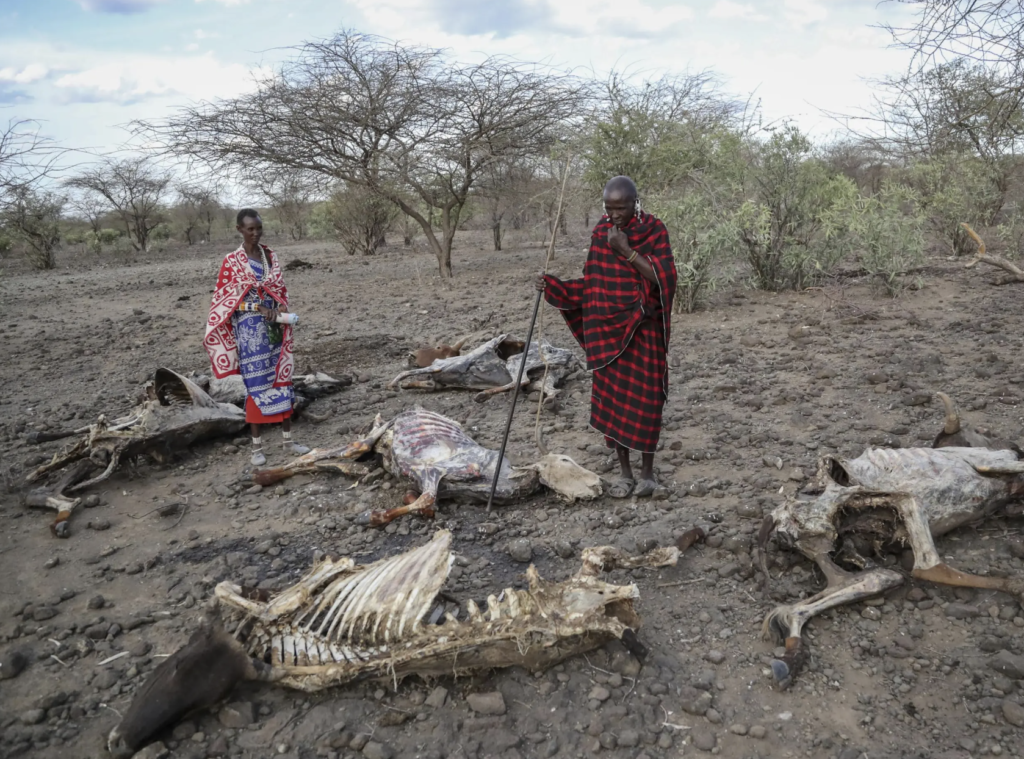
Environmental causes of food insecurity are growing, and there are many different environmental causes, the primary cause being climate change. Climate change is the most prominent cause of food insecurity, and it severely disrupts agriculture. It operates through positive feedback loops and amplifies every other environmental issue. In the short-term, this is especially obtrusive in arid and semi-arid climates, where precipitation is already low. This can cause soil degradation, where fertile land becomes infertile due to dryness and desertification, and therefore agriculture becomes increasingly difficult. In the long-term, polar and tundra biomes are affected most prominently by climate change.
Geography students may know that these regions are warming almost 4 times as quick due to the disruption of the albedo effect: white surfaces such as snow and ice are more reflective of the Sun’s light, which means they absorb less heat. Global warming melts these surfaces and exponentially increases the rate of warming, which melts more ice and so on. In the long term, the destruction of delicate biomes such as tundra and polar biomes will affect agriculture worldwide.
On the bright side, distribution and climactic problems can be bettered with the help of technology and science. AI is currently a controversial entity and is perceived as a double-edged sword. It can be extremely beneficial to optimise the efficiency of our technology, and smooth running of our mechanical systems is tremendously important. A publication called Science Direct states that ‘Using energy more efficiently is a key strategy for lowering global carbon dioxide emissions.’ Increasing energy usage can be crucial for transforming the agricultural sector to become more sustainable. AI can help optimise systems and efficiency by monitoring systems precisely, which leads to less energy being made redundant. More specifically, examples in the agricultural sector include improvements in things such as climate prediction/monitoring and precision farming.
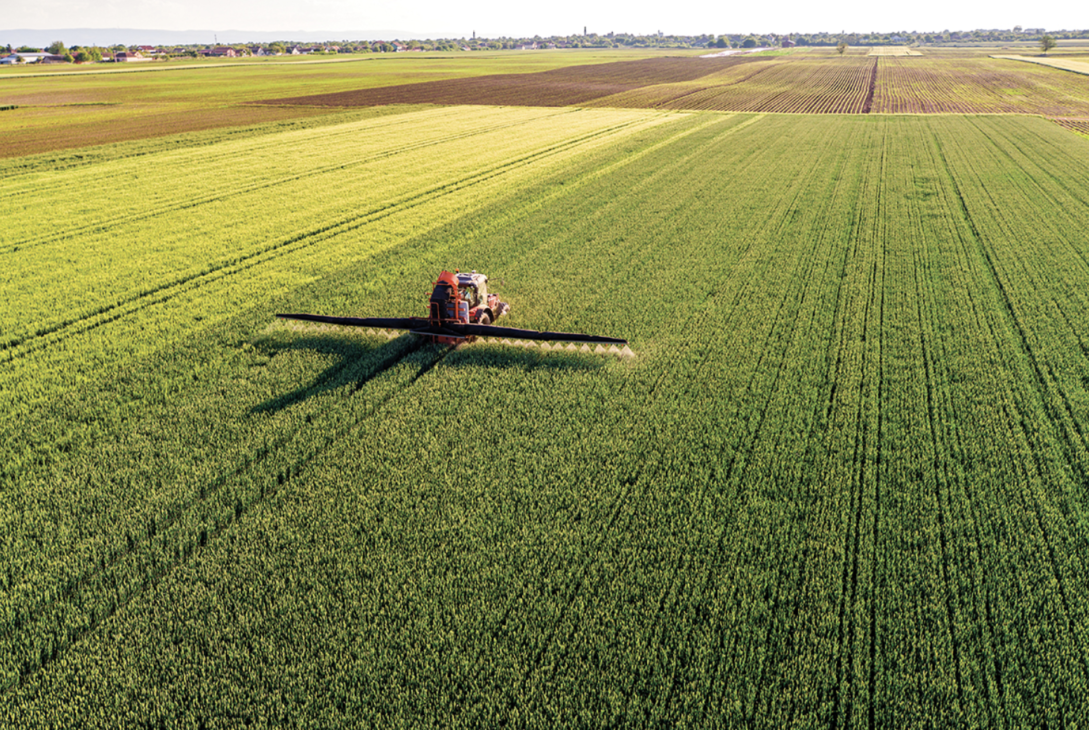
Climate prediction/monitoring involves AI providing farmers with reliable, accurate and fast weather forecasts, which can help them plant crops at a suitable time, or determine the most efficient amount of fertiliser needed. This can result in improved crop yields and lower costs, thus reducing waste and also allows farmers to allocate funds to other things. Precision farming has the same benefits but is a different process. It is more active, involving farmers using drones and sensors to automate systems further, or using AI algorithms to monitor crop health. Figures show that farms in the UK are already adapting to AI. The Royal Agricultural University reports that approximately 67% of farms in the UK have utilised some form of precision farming, and other studies advocate that yields could increase up to 20%.
References
“2011 East Africa Drought.” Wikipedia, the Free Encyclopedia, Wikimedia Foundation, Inc, 4 Sept. 2025, en.wikipedia.org/wiki/2011_East_Africa_drought. Accessed 15 May 2026.
“The Arctic has Warmed ‘Nearly Four Times Faster’ Than the Global Average.” CarbonBrief, https://www.carbonbrief.org/the-arctic-has-warmed-nearly-four-times-faster-than-the-global-average/
“From Fields to Algorithms: The Rise of AI in the Young Farmer’s Toolkit.” True Events, Sacred Symbols: The Ethics of Horror Films, pa-training.shorthandstories.com/from-fields-to-algorithmsthe-rise-of-ai-in-the-young-farmers-toolkit/
“How to Reduce Food Loss and Food Waste.” Yara None, 25 Sept. 2024,
www.yara.com/knowledge-grows/how-to-reduce-foodwaste/#:~:text=In%20industrialized%20countries%2C%2040%20percent,nutrition%20also%20impacts%20food%20waste
“Theoretical Efficiency Limits for Energy Conversion Devices.” Science Direct,
www.sciencedirect.com/science/article/abs/pii/S0360544210000265#:~:text=The%20result%20estimates%20the%20overall,at%20their%20theoretical%20maximum%20efficiency
“UN Agencies Warn Key Food and Nutrition Indicators Exceed Famine Thresholds in
Gaza.” FAORegionalOffice-NearEast-RNE, 28 Dec. 2023, www.fao.org/neareast/news/details/unagencies-warn-key-food-and-nutrition-indicators-exceed-famine-thresholds-in-gaza/en
Winters, Paul. “AI is Transforming Weather Forecasting − and That Could Be a Game Changer for Farmers Around the World.” The Conversation, 3 Sept. 2025, theconversation.com/ai-istransforming-weather-forecasting-and-that-could-be-a-game-changer-for-farmers-around-theworld-263030